



There’s no place like… Florida? Tucked away in Cape Canaveral, FL, the Wizard of Oz Museum has become an unlikely hit by merging classic storybook nostalgia with cutting-edge immersion. On one hand, this is a treasure trove for Oz fans: over 2,000 artifacts and memorabilia fill the shelves – from original 1900s Oz books to a Winkie guard’s spear and even Judy Garland’s actual Dorothy dress and ruby slippers myhomeandtravels.com
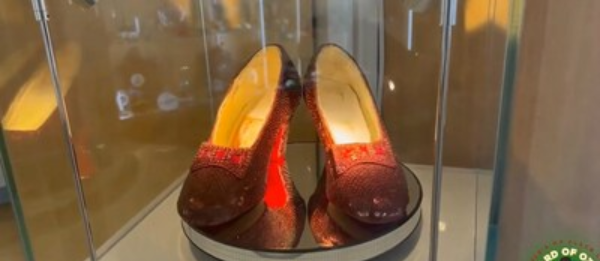
Stepping inside, you’re surrounded by the tangible history of The Wizard of Oz. But it’s the next step – into the immersive digital fantasy room – that truly transports visitors over the rainbow. The museum created a 360° projection theater that brings L. Frank Baum’s world to life on a grand scale. Using 30+ laser projectors, every wall and even the floor becomes a canvas for Oz prnewswire.com.
One moment you’re standing in a Kansas farmhouse as a tornado begins to howl; the next, the room swirls and you find yourself “inside” the cyclone, with debris and farm animals flying past (all projected visually around you). When the twister settles, you’re in vibrant Munchkinland – blue skies on the walls, and the Yellow Brick Road curling at your feet via floor projectionhttps://www.prnewswire.com/news-releases/immerse-yourself-in-technology-at-the-wizard-of-oz-museum-301998756.html. As iconic music plays, you almost expect Dorothy and Toto to skip by. The show continues through the story’s scenes: the field of poppies, the gleaming Emerald City, each segment a short video sequence that loops continuouslyhttps://www.prnewswire.com/news-releases/immerse-yourself-in-technology-at-the-wizard-of-oz-museum-301998756.html.
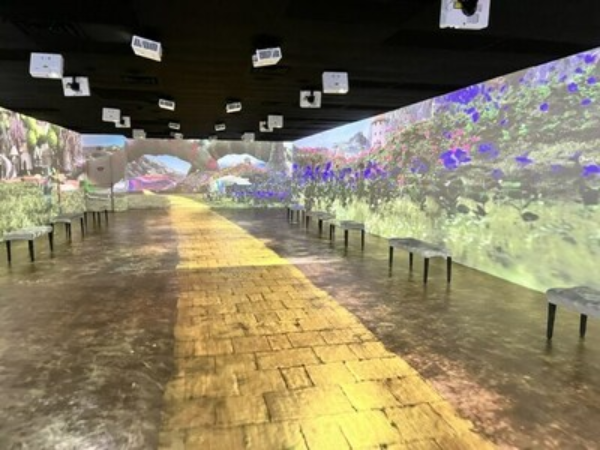
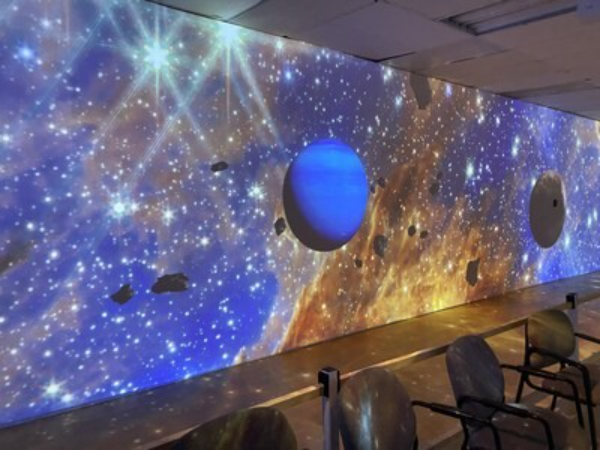
What makes this special is how it makes visitors feel like characters in the story. You’re not just viewing Oz; you are immersed inside it, walking down the Yellow Brick Road, enveloped by the glow of Emerald City’s towers. The projections are high-resolution and even utilise some 3D effectshttps://www.prnewswire.com/news-releases/immerse-yourself-in-technology-at-the-wizard-of-oz-museum-301998756.html, making it far more lifelike than the flat “cartoonish” projections you might see in other shows. And because it’s a continuous loop, guests can linger and watch scenes multiple times, soaking in details or snapping that perfect photo with Oz all around them. This digital extravaganza is included with museum admission, effectively turning a small community museum into a must-see attraction. (Fun fact: it’s rated the #1 museum on Florida’s Space Coast and even the top children’s museum in the U.S. on TripAdvisor – a testament to how engaging the experience ishttps://www.prnewswire.com/news-releases/immerse-yourself-in-technology-at-the-wizard-of-oz-museum-301998756.htmlhttps://www.prnewswire.com/news-releases/immerse-yourself-in-technology-at-the-wizard-of-oz-museum-301998756.html!) The museum didn’t stop at Oz either; they smartly maximise their tech investment by also showing an immersive Van Gogh art film in the same room, alternating with the Oz footagehttps://www.prnewswire.com/news-releases/immerse-yourself-in-technology-at-the-wizard-of-oz-museum-301998756.html, as well as a space-themed journey using James Webb Telescope images for an extra surprise tie-in to the local NASA culturehttps://www.prnewswire.com/news-releases/immerse-yourself-in-technology-at-the-wizard-of-oz-museum-301998756.html. This flexibility keeps content fresh and appeals to a wider audience.
Tips for Community Museums & Story-Based Tourism: You might be thinking, “That sounds expensive and high-tech!” It’s true that the Wizard of Oz Museum went big with projectors, but you can still adapt many of their ideas on a smaller budget. Here are some tips to infuse a bit of Oz-like magic into your community museum or attraction:
- Dynamic Digital Displays: If installing dozens of projectors is out of reach, start with one good projector and a decent-sized wall. You can create an “immersive corner” that plays a looping video or slideshow related to your museum’s theme. For instance, a local heritage museum might project a panoramic landscape painting with subtle motion (clouds moving, water flowing) to set the mood in a gallery. Or a small literary museum could project illustrations with text excerpts appearing and disappearing to mimic that flowing river of words (like MoLI’s exhibit). The key is using motion and scale – a wall-filling image or animation instantly feels more immersive than a small screen. Many museums have begun using inexpensive projectors to animate dioramas or maps; it’s a cost-effective way to add “life” to static displays.
- Interactive Storytelling on Personal Devices: Not ready for large projections? Consider leveraging visitors’ smartphones for immersion. With free or low-cost apps, you could create an augmented reality (AR) tour: point the phone at a painting and see it come to life with animation, or scan a QR code to watch a short video of an historical re-enactment right where the event happened. For example, a Jack and the Beanstalk Museum (if one existed!) could have an AR beanstalk grow on the user’s screen when they scan a marker on the floor, making it seem like a giant plant is sprouting in the room. The Wizard of Oz Museum chose projection to put people in the story; AR can do similarly on a smaller, personal scale – and UPLIFT’s AR toolkits can guide you to user-friendly apps to build such experiences.
- Mix Old and New: One reason the Oz Museum delights visitors is the mix of authentic memorabilia with modern tech. The contrast actually boosts appreciation for both – seeing the real Dorothy dress after walking through a magical digital Oz makes you realise how special the real artefact is, and vice versa. Small museums can emulate this by pairing artifacts with multimedia context. If you have an old object or document, consider a digital kiosk or simple tablet next to it where visitors can, say, view a short dramatization or hear an audio reading that relates to it. This layered approach means even if you can’t build a whole immersive room, you can still give a taste of immersion at individual exhibits. It keeps different types of learners engaged (visual, auditory, etc.) and can be done incrementally, exhibit by exhibit.
- Community Engagement and DIY Approach: Remember that immersion isn’t solely about expensive technology – it’s about engaging the imagination. You can involve your local community to create immersive elements. Perhaps local theater students could record voice-overs for a self-guided audio tour (imagine hearing the “ghost” of a historical figure narrating their own exhibit). Maybe the art class can help paint a floor mural that visitors can literally walk on (like a Yellow Brick Road of your own). These low-tech interventions, combined with selective use of digital media, can transform your space. And because they’re unique to your location, they tell your story in an authentic way.
UPLIFT Connection: The Wizard of Oz Museum’s success illustrates that even a relatively small attraction can shine brightly with the right approach. To help community museums and story-based tourism providers replicate this kind of innovation, UPLIFT offers resources like a comprehensive Trainer Guide and AR/VR toolkits.
The Trainer Guide can walk you through developing an immersive experience from scratch – covering everything from conceptualisation (choosing which parts of your story to dramatise) to technical setup (what equipment or software you might need) to marketing the new experience to your audience. It’s like having a mentor on hand, specifically for immersive tourism.
The Workshops, Implementation Clinics and Video Showcase introduce various technologies at different price points. UPLIFT resources highlight many free or freemium tools for creating AR content, virtual tours, or interactive maps, which are perfect for small budgets. They also provide case studies of small museums that have successfully used VR or AR, so you can learn directly from peers.
By taking advantage of UPLIFT’s guidance, you could, for example, create a simple VR experience where visitors put on a headset and watch a 3-minute 360° video of a historical scene – a mini version of that “tornado ride” in Oz, tailored to your content. UPLIFT emphasises sustainability and accessibility too: they’ll encourage you to start small, test what works for your visitors, and build up gradually. The bottom line is, you don’t need a big city or a Wizard’s budget to enchant your audience. With creativity, community input, and the support of projects like UPLIFT, there’s no place like your museum for immersive storytelling!
Here are all the resources you need to do just that.
FREE RESOURCES
The UPLIFT Project offers the following resources:uplifttourism.eu
- Research Reports: Detailed analyses on integrating immersive technologies into tourism, including trends, skills needs, and best practices. https://uplifttourism.eu/resources/immersive-tourism-insights-research-best-practices/
- Compendium of Case Studies: A collection of successful implementations of VR, AR, and AI in tourism, providing practical insights for VET providers and SMEs. https://uplifttourism.eu/resources/immersive-tourism-insights-research-best-practices/
- Immersive Workshops: Hands-on training sessions designed to equip tourism professionals with practical skills in immersive technologies, such as AR, VR, and XR, to create engaging visitor experiences and storytelling https://uplifttourism.eu/workshops-and-clinics/
- Video Lessons and Resources: Educational materials produced from workshops, aimed at a broader audience to disseminate knowledge on immersive tourism practices https://uplifttourism.eu/video-lessons/
- Webinars and Seminars: Online events sharing key insights and best practices in immersive tourism with educators, professionals, and stakeholders across Europe. Register here for our online event on 8th September https://shorturl.at/8Be6w
Written by: Laura Magan, Feltech, Ireland (Uplift Partner)