



Photo by mdreza jalali on Unsplash
Blog post by Monika Grinevičiūtė, VILNIUS TECH “LinkMenų fabrikas“
Vilnius has been a UNESCO City of Literature since 2021, a historical saga has its own guided tour, and a Nobel laureate's summer house looks out over the Curonian Spit. Lithuania's literary heritage is deep. Its literary tourism is only beginning to catch up, and that is the opportunity.
A city that was born in a letter
Vilnius first appears in history in 1325, in letters from Grand Duke Gediminas inviting merchants and craftsmen to settle, which is why the city likes to say it was born literary. On 9 November 2021 UNESCO named it a City of Literature, alongside Gothenburg and Jakarta and after Tartu as the second in the Baltics. The status is permanent. The application, prepared since 2018 with the Lithuanian National Commission for UNESCO, the Publishers' Association, the Writers' Union and the city library, rested on a living scene: the Vilnius Book Fair every February, the Vilnius Pages festival, the Children's Book Island, an open-air reading room on Lukiškių Square and the Vilnius Literary House for author talks and book clubs.
The writers who left a map
Adam Mickiewicz lived at number 5 on what is now Literatų gatvė, a lane that held printing presses in the 17th century and bookshops in the 19th. As a student he belonged to the secret Philomath Society at Vilnius University (1817–1824); his arrest and the Basilian monastery cell where he was held became the setting of Forefathers' Eve. Since 2011 the walls of Literatų Street have carried more than 225 small artworks by Lithuanian artists honouring writers from Lithuania and the world, and the wall is still growing.
Czesław Miłosz, Nobel laureate of 1980, studied at the same university; the Miłosz Stairs lead down into the Old Town, and his birthplace in Šeteniai, near Kėdainiai, is now a cultural centre. Romain Gary was born in Vilnius in 1914 and set the childhood chapters of Promise at Dawn on J. Basanavičiaus gatvė, where a small bronze boy clutching a galosh marks the spot.
Then come the novels that made modern Vilnius a literary setting: Ričardas Gavelis's Vilnius Poker (1989), Jurgis Kunčinas's Tūla (1993), set in Užupis, and above all Kristina Sabaliauskaitė's Silva Rerum saga (2008–2016), four novels following a noble family through the city from 1659 to 1795. Demand from readers was so strong that in 2011 the Vilnius tourist information centre launched guided Silva Rerum walks through the Old Town, and they became among the most popular tours in the city (Lithuanian Culture Institute). Today the free Literary Vilnius route on the Neakivaizdinis Vilnius platform strings these books together, with excerpts read on the spot where the scenes take place.
Beyond the capital
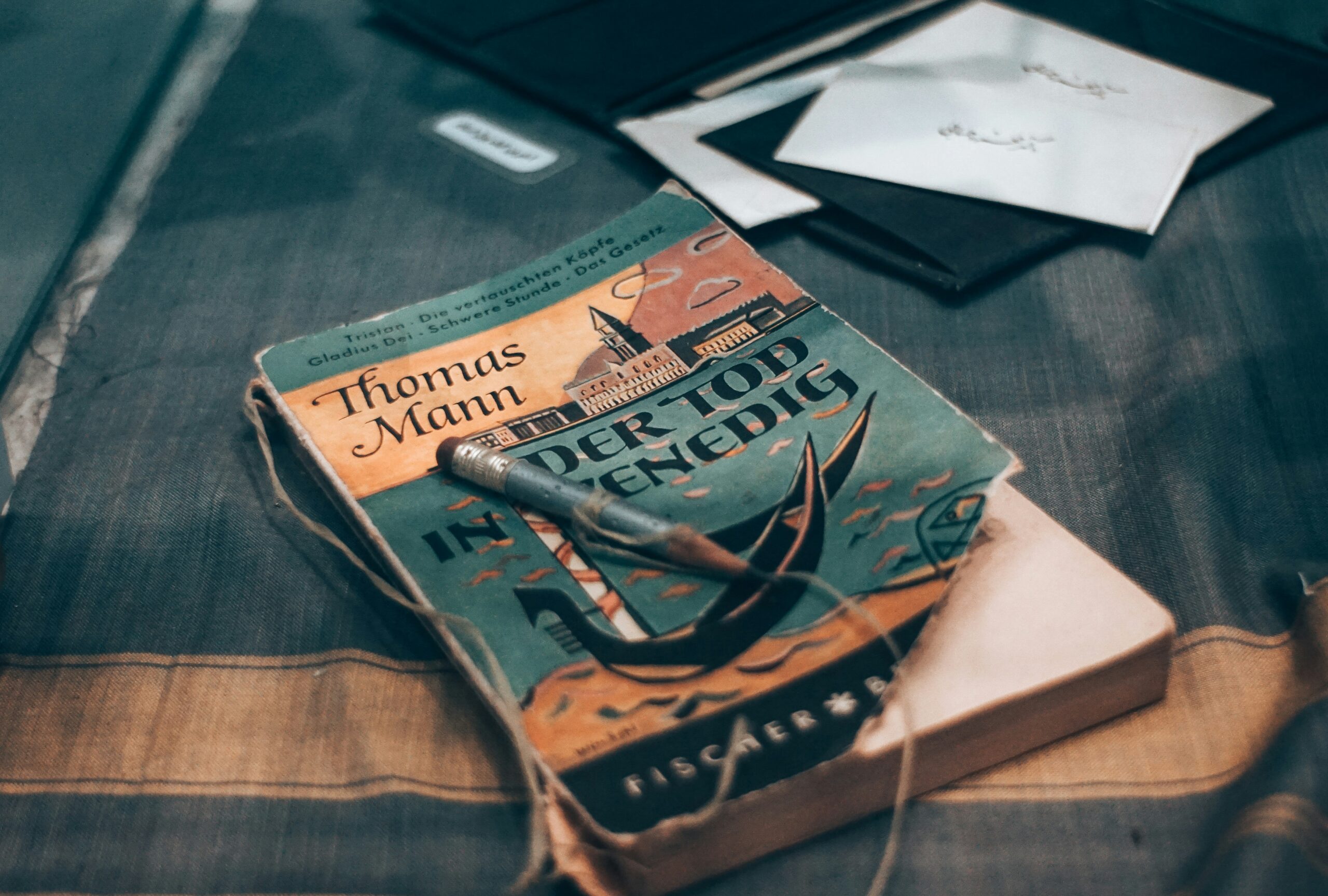
In Nida, on the Curonian Spit, the Nobel laureate Thomas Mann built a summer house in 1930 and spent three summers there writing parts of Joseph and His Brothers before exile ended the visits in 1933. The house is now the Thomas Mann Memorial Museum and cultural centre, with seminars held since 1987 and a summer festival of concerts and readings, and the local tourist office runs a walking tour from the German Nidden to today's Nida. Kaunas keeps the house of the national poet Maironis as the Maironis Lithuanian Literature Museum. And for the international reader, Ruta Sepetys's Between Shades of Gray (2011), the bestselling novel of the 1941 deportations, became the film Ashes in the Snow (2018), shot in Lithuania, a ready-made bridge between literary and film tourism.
What is missing, and what immersive technology adds
Plaques, a few walks and some excellent museums are the current offer. What literary tourism in Lithuania lacks is depth of experience for a visitor who has not read the books, and most visitors have not. Immersive tools solve exactly that problem. An augmented reality layer on Literatų Street can play a passage, in the visitor's language, at the plaque of the writer who wrote it. A VR reconstruction can show the 17th-century Vilnius of Silva Rerum from the courtyard where the walk stops. An audio route can let Gary narrate his own street. A virtual production studio such as VILNIUS TECH's Faux Real can stage a scene from a novel for a destination film without a costume drama's budget.
Four steps for a tourism business
- Choose one book and one route. A single, well-told story beats a catalogue of names.
- Partner early. The City of Literature programme, the Vilnius Literary House and the memorial museums already hold the rights, the readers and the expertise.
- Translate. Offer the route in Lithuanian and at least one other language from day one; the writers above are read across Europe.
- Pilot with schools. The national Culture Passport scheme funds class visits and gives an immersive route its first audience.
How UPLIFT ties it together
The project's results are free and open to anyone. The Research Report and Best Practice Compendium gather immersive examples from local libraries to international literary trails, with the lessons each one learned. The four video lessons follow the four steps above. Lesson 1 helps choose the one book and one route and position them for a defined audience. Lesson 2 matches the story to the right technology, whether a passage played in AR on Literatų Street or a reconstructed 17th-century courtyard in VR. Lesson 3 shows how to build that first VR scene on a budget with 360° photography and free tools. Lesson 4 is made for literary places: a QR code on a plaque, a doorway or a dune that unlocks a character's narration in the visitor's own language. None of it needs a developer or a large budget, which is the point. Vilnius has been writing itself for seven hundred years; UPLIFT gives its tourism sector the tools to let visitors read it.